A terminal for your own systems
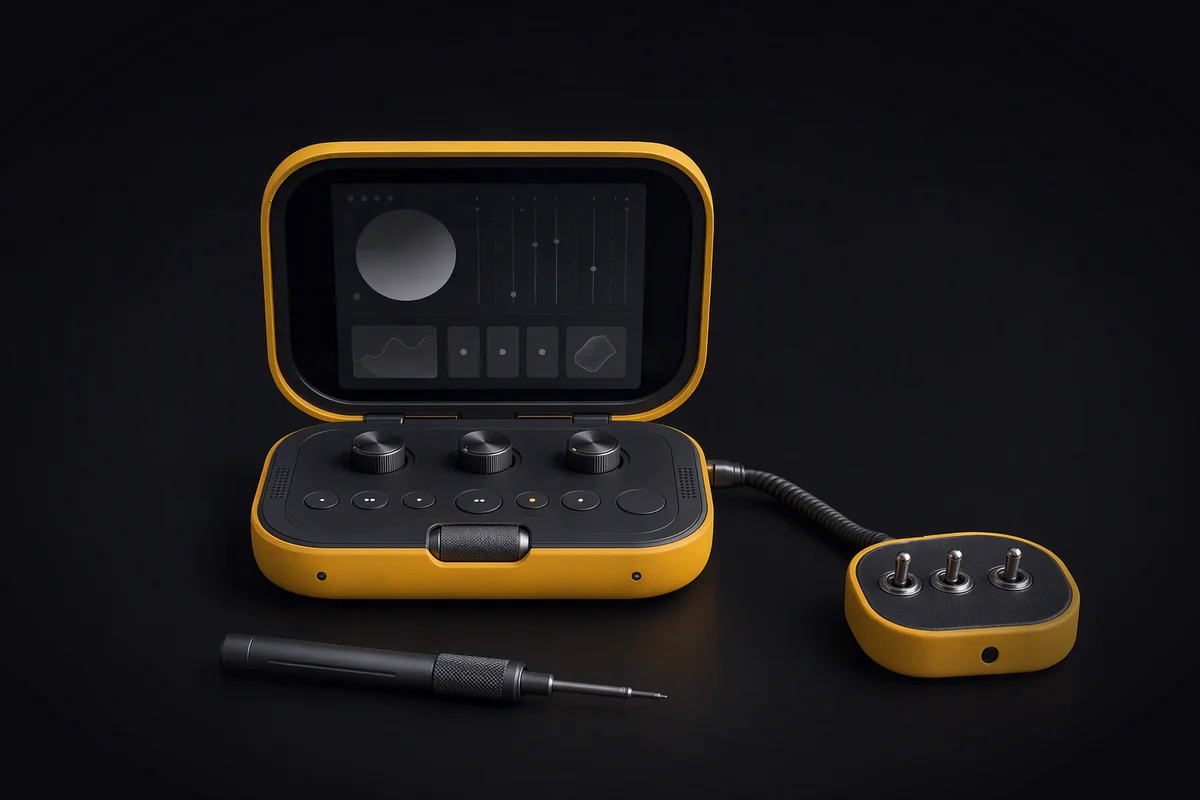
The cyberdeck in fiction was never a phone. It was an operator’s tool: something you carried to reach systems that belonged to you, built to be opened, modified and understood by the person holding it. That distinction — a terminal for your own infrastructure rather than a window onto somebody else’s — is not aesthetic. It changes nearly every decision in the design.
Consumer device versus operator tool
A consumer device is optimised for the first ten minutes: unboxing, onboarding, the moment someone decides whether to keep it. It hides its internals because most owners do not want them, and it assumes the vendor knows better than the user, which is usually true.
An operator tool is optimised for the thousandth hour. It exposes its internals because the person holding it is expected to fix it, extend it, and know why it did what it did. It assumes the user has a job that the vendor does not fully understand — which is also usually true, and much less often designed for.
Both are legitimate. They produce almost opposite devices.
What “operator tool” means in practice
Physical controls for the things that matter. A hardware switch that kills the microphone. A visible indicator that is wired to the camera rather than drawn by software. Buttons you can find without looking, because you will be using this while doing something else.
Documented and repairable. Schematics, part numbers, standard screws. A broken screen should be a repair rather than the start of a replacement cycle. This is also, incidentally, the cheapest form of security review: hardware nobody can inspect is hardware nobody can verify.
No store, no feed, no engagement metric. The device has nothing to sell you and no reason to want more of your attention than the task requires. Success is measured in interruptions avoided.
It reaches your systems directly. Not through a vendor cloud that brokers access to your own infrastructure. The deck talks to your own system, your own assistant and your machines, and if the manufacturer disappeared tomorrow it would keep doing so.
That last point is the real test. Most “smart” hardware stops working when a company loses interest. A terminal for your own systems should be indifferent to whether we are still here.
Identity is the interesting part
The unglamorous reason an operator tool beats a consumer device in a working environment: it can be an actor in the system.
A deck carried by a technician is not just a screen. It is an identity — someone acting under a delegation, with limits, whose actions are recorded the same way a robot’s or an agent’s are. Approving a movement, confirming an exception, authorising a machine to continue: all of these are things a person does, and all of them belong in the same audit trail as everything else.
That only works if the device is a first-class part of the system rather than a viewer bolted onto it. Which brings the argument back to owning the stack: you cannot make a device a trusted actor in your own infrastructure if its identity is issued and revoked by somebody else’s platform.
What we are actually building
Five bodies — card, wrist, pocket, a node at home and a module for robots — running one assistant, KyberBot, holding one identity, governed by one policy set, on KyberLinux, an open OS. Buy one ready-made or build your own.
Not a phone replacement for everyone, and not a gadget. A tool for people who operate something: a warehouse, a workshop, a fleet, a business. The kind of person for whom the phone was always the wrong shape and the cloud was always the wrong place.
- cyberdeck
- operator tools
- ownership
- repair