The ID card is the most underrated computer
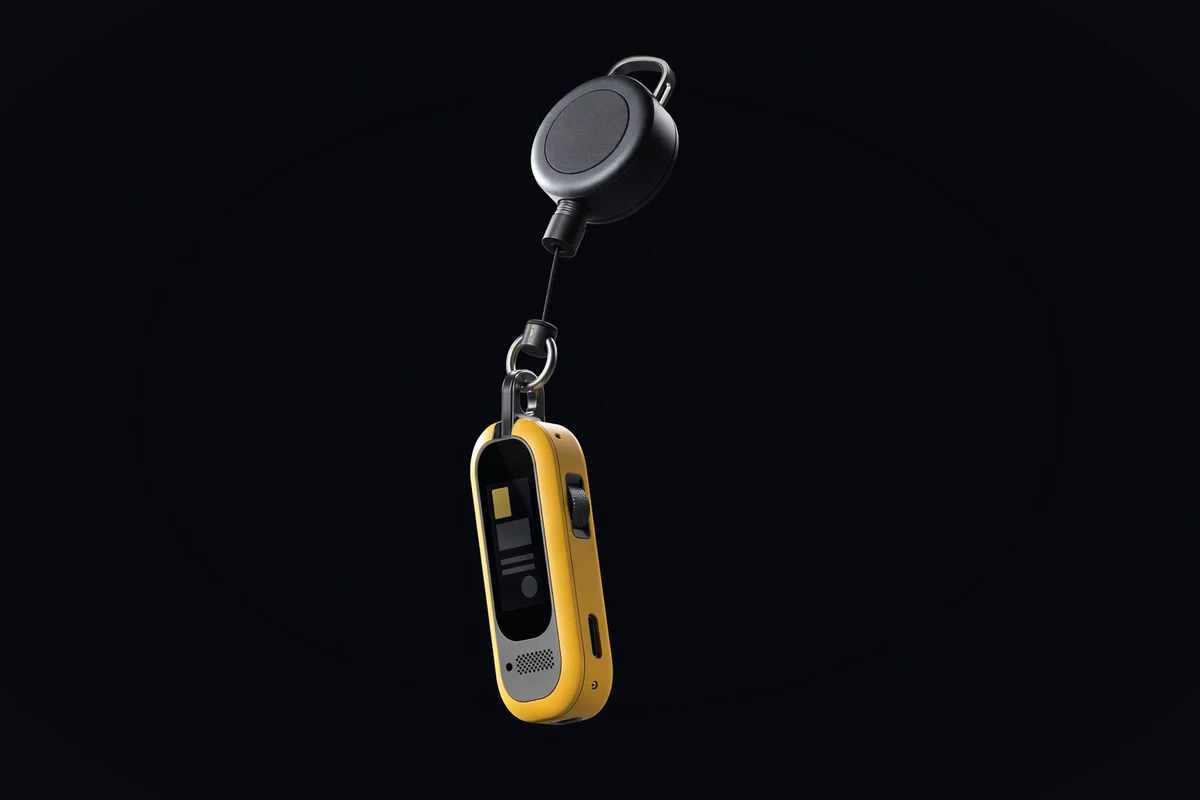
The badge on a lanyard is the most widely carried computer in professional life and almost nobody thinks of it as one. It is already an identity, it is already accepted in rooms where a phone is not, and its presence is already meaningful to the building around it. As a starting point for a carried device, that combination is hard to beat — and it is mostly unexploited.
What the card already does
A modern access card is a computer with a radio, a secure element and a defined relationship with the infrastructure. It proves who you are to doors, printers, machines and, increasingly, to software.
What it does not do is anything for you. The card serves the building. It has no display, no memory of your day, no ability to tell you anything, and no relationship with your assistant. It is a key, and keys are dumb on purpose.
The question worth asking is what happens when the thing that already represents you gets a little compute, a little memory and a very small amount of screen.
Why the shape is better than it looks
Nobody notices another card. The single biggest barrier to any new carried device is that it is an extra thing. A card is the one form factor that costs nothing to adopt, because the lanyard is already around your neck.
It is socially invisible. Glancing at a badge reads as nothing. Pulling out a phone in a meeting reads as disengagement, and putting a watch in someone’s face reads as rude. This is not a small point: a device you are embarrassed to use is a device you do not use.
It is already trusted by the infrastructure. Doors, machines and systems have a relationship with the card. Giving that relationship an assistant is a much shorter path than giving an assistant a relationship with the building.
Constraints force honesty. A card has almost no power budget and almost no screen. You cannot cram a general-purpose computer into it, which means the design has to answer a much better question: what are the five things this must do?
What it can realistically do
Not everything, and the discipline is the point.
Presence and identity — the thing it already does, extended so KyberBot, your assistant, can act under the same identity. Capture — a button that starts a recording, a moment marked as important, a note taken without opening anything. A glance surface — a small display for the one thing that matters right now, not a feed. Silent signalling — a vibration when something needs you, which is far less disruptive than a screen. And local capability — enough compute for the near-you work, with everything else routed to the deck in your pocket, the node at home or the systems you own.
The design line we keep drawing
A card should never become a small phone. The moment it grows a scrolling interface it inherits every problem the phone has, in a worse form factor.
The card is for presence and capture. The wrist is for hands-busy interaction. The pocket deck is for tasks that deserve a screen. The node at home is for memory and the jobs too big to carry, and the core is for a robot. Same KyberBot, same identity, same policies underneath — five bodies with five honest jobs.
Getting that division right matters more than any individual specification, because a device that tries to do everything ends up being the compromise everyone already carries.
- form factor
- identity
- wearables
- design