The agent factory leaves the desk, and so does the person in it
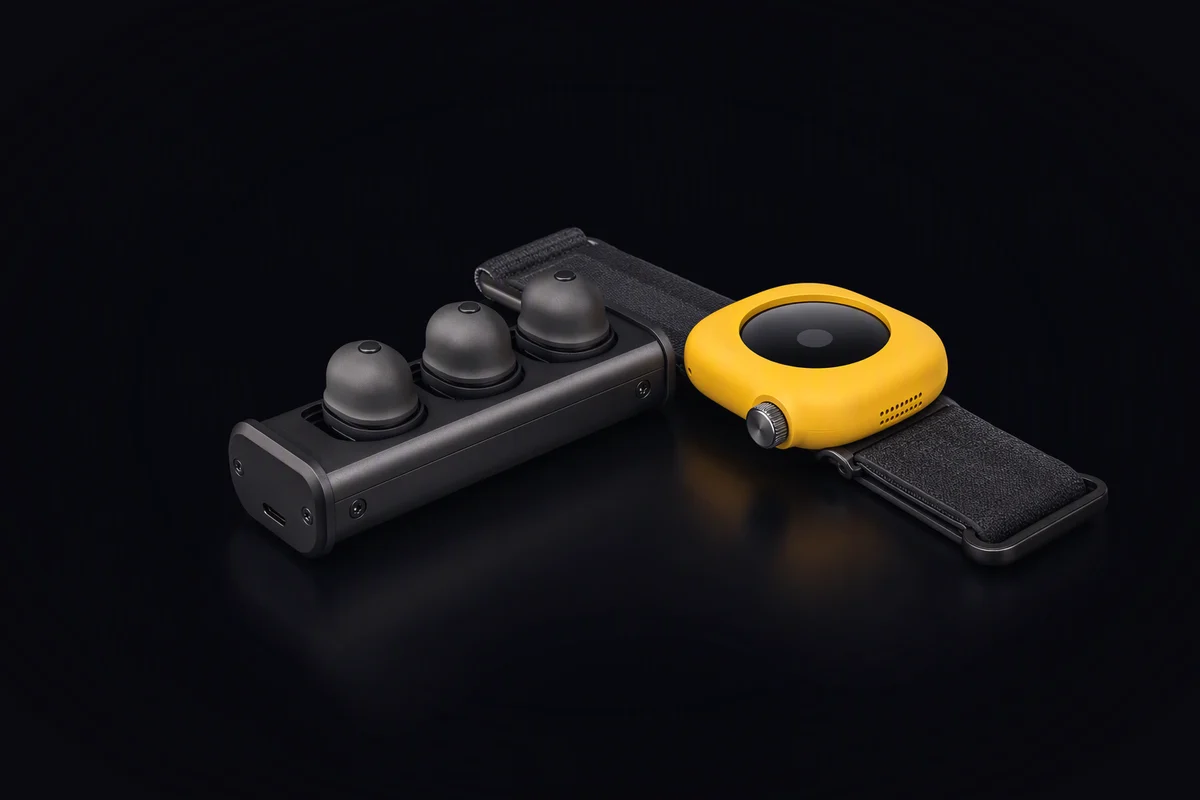
Agent factories will leave the software department, and the person who makes the decisions in them will leave the desk at the same time. A factory, in this sense, is a loop: work comes in, agents carry it through fixed stages, and a person stands at the few points where something has to be decided. Programmers got the loop first, and they approve at the same computer they work at. A warehouse manager, a technician at a customer’s site and a shop owner do not sit at a computer. Chain the decision point to a desk and the factory outside software ends up queueing for that desk.
Four steps, and somewhere along the way the place changes
Software teams went from a chat window beside their work to a loop in which agents do most of the steps. The rest of the company is about to make the same walk. One thing is different: outside software, the work does not happen at a screen.
| Step | Programmer at a desk | Technician at a customer’s site | Where the person is when they decide |
|---|---|---|---|
| 1. Chat beside the work | asks a chat and pastes the answer into the editor | rings the office so someone can look something up | at somebody else’s screen |
| 2. Suggestions in the tool | the editor completes the next lines | a phone app suggests a spare part | eyes on the phone instead of the machine |
| 3. An agent driven from one place | drives an agent on a laptop | in the evening, from memory, drives an agent through the day’s report | at a laptop, after the fact |
| 4. The factory | a ticket enters the loop; a person approves the plan, the check and the release | a job enters the loop; agents prepare the diagnosis, the parts order and the report; the technician approves on site | wherever the work is |
In software, step four does not move anyone. Outside it, it does. A technician is not going to drive back to the office to press “approve”, and should not have to.
Same condition, harder in the field
Programmers got factories first because their work has long met three conditions: the input is written down, the output can be checked, and every change leaves a trail. Everyone else has to get there. In the field, each condition has its own trap.
Written input. The technician’s hands are inside the machine. If writing something down means taking out a phone, unlocking it and typing with a thumb, nothing gets written, or it gets written that evening in three sentences. The input has to be something you can say out loud at the moment you see it.
Checkable output. Here, checking means looking at the thing, not at a screen. Is the rack where the report says it is? Is that the seal the agent ordered? An agent can prepare the checklist. Someone who is looking has to tick it.
A trail of changes. Who approved it? In plenty of warehouses the answer is the “store1” account on the phone hanging by the door. A trail without an identity is not a trail. Every decision in the loop needs one specific person behind it.
“Did you approve that order?” the manager asks. (Someone did. Whoever was holding the phone by the door at 2:12.)
Two jobs, in the field too
In teams that already work this way, everyone has two jobs. One is the work itself. The other is improving the factory that runs the work.
The technician still answers for the repair, because they can see the machine and the agent cannot. But when the agent suggests the wrong part, the best moment to correct it is right there, at the machine. By evening that correction has shrunk to “something was off with the seal”. Said on the spot, it goes into the factory as a proposed change to the agent’s instructions, which someone reviews and accepts. Next time the agent suggests the right part.
The second job does not exist if you cannot report the correction where the mistake is visible.
Where the factory does harm
A factory with nobody in it. The diagnosis looked confident, so the agent ordered a few thousand in parts on its own. Wrong parts. Spending, releasing and anything that touches a customer stay with a person. The agent prepares and proposes. The person decides and answers for it.
A device that counts people. Once approvals live on a wrist, it is tempting to turn them into a meter: seconds from notification to tap, decisions per hour, who is “fastest”. People then start tapping faster, not better, and an approval given by reflex has stopped being an approval. Numbers from the factory are for improving the factory, not for ranking staff. That is why we design hardware that does not report on its owner, employers included.
A decision on the wrong screen. One line on a wrist is enough for “yes, accept the delivery”. It is not enough for an order nobody has read in full. If a device cannot show you what you are signing, it should not let you sign it.
Where KyberDeck fits
KyberDeck is the body through which a person touches the whole system. In an agent factory it sits at the decision points, and only there. This is how we split that work across the five forms:
- Card says who you are. Every “yes” is recorded under your name, not under the account by the door. It shows one line: how many decisions are waiting for you.
- Band handles short decisions while your hands are busy: voice, a buzz, a confirming turn of the crown. And the correction you speak at the moment the mistake is in front of you.
- Pocket is for decisions you have to read: an order, a report, a plan. A screen and a keyboard, because the decision needs them.
- Node stays at home or in the back office, holding the queue and the record of every decision. The home node keeps working when nobody is looking at it.
Underneath, KyberBot decides which question goes to which device and whether anyone needs asking at all, and KyberAgent swarms do the work, each agent in its own KyberCell. KyberDeck is not the factory. It is where the factory meets a person.
KyberDeck is pre-launch. Nothing is for sale, and the behaviour described here is a design goal, not a measured result.
How you will know it works
| Vanity metric | Outcome metric |
|---|---|
| notifications sent to devices | how many times a person touched one job before it closed |
| average time from notification to tap | the share of approvals that later had to be reversed |
| devices handed out in the field | jobs closed on site, without a trip back to the office |
| corrections reported | corrections that changed an instruction so the mistake did not come back |
Be honest with yourself: a short response time looks good on a chart, and it can also mean people have stopped reading.
Where to start on Monday
Pick one task away from a desk that comes back every week: taking in a delivery, servicing a machine at a customer’s, closing a shift in a shop. Write it down as if you were handing it to someone new: what comes in, what should come out, how to tell it is right, who approves. Then add a fifth question programmers never need to ask: where is that person standing when they decide, and what is in their hands?
That leaves a choice. You can build a factory in which every decision waits for someone to get back to a desk, and watch the queue grow all day. Or you can carry the decision point to where the work is, and make sure the person there is still deciding rather than tapping by reflex.
- agent factory
- human in the loop
- field work
- KyberDeck
- metrics