Your agent factory learns from your decisions. Who keeps them?
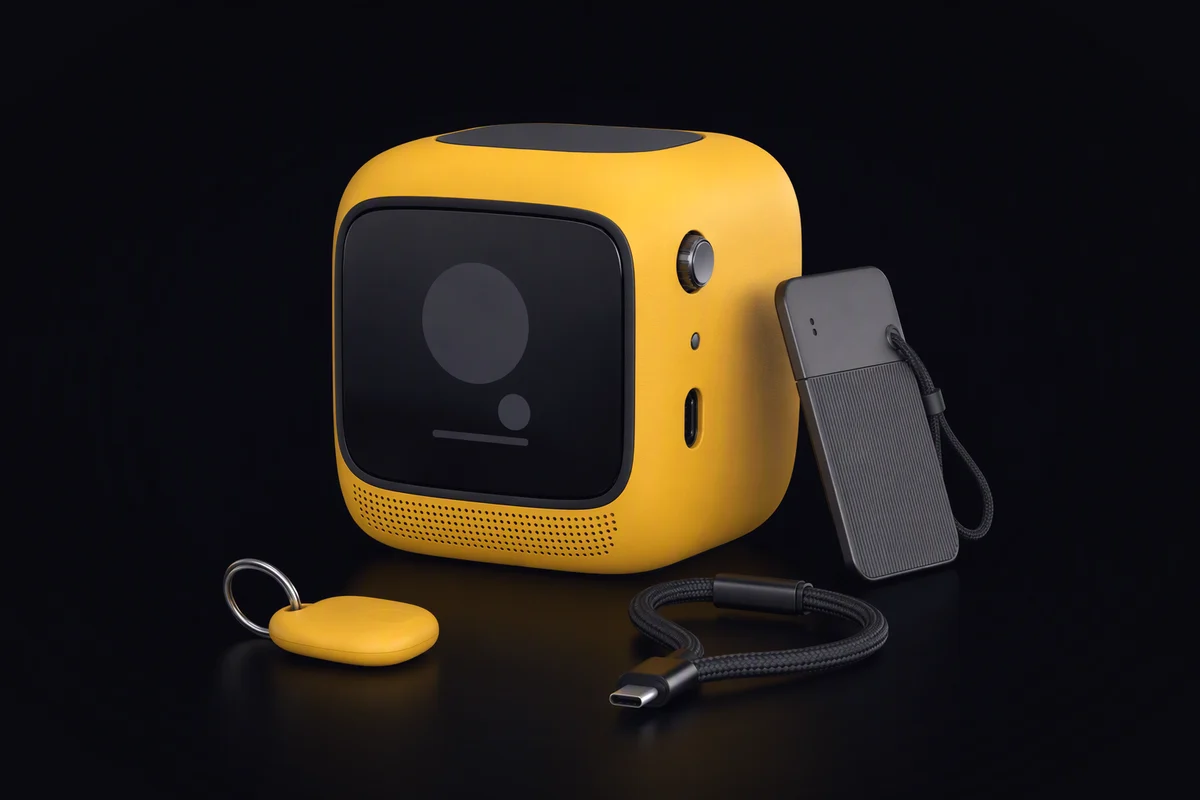
The most valuable thing in an agent factory is what it learns about how you work, and much of that is made on the device where you say yes or no. You can swap a model in a week. You cannot swap a year of decisions: which order you turned down and why, which correction you spoke at the machine, who signed off on what. If that record sits in a vendor’s app, in their account and their format, the factory is learning from your decisions on someone else’s behalf.
Where the problem comes from
In the previous piece we argued that the decision point leaves the desk and follows the person. The easiest way to do that runs through a phone. Every tool has its own app with notifications and an “approve” button. A few months in, it looks like this:
“Where’s the record of who approved that customer’s refund?” the owner asks. “In the app,” says the shift manager. (There are five apps. Each holds a piece, and one expired along with its free trial.)
Every decision lands in a different account. Spoken notes are either lost or uploaded to somebody’s cloud as recordings. The identity of the person who approved is a login at a vendor. Nobody chose this arrangement. It grew out of convenience.
What you actually own
An agent factory is several layers. Seen from the body, the device in your hand, the list looks like this:
| Layer | Where it is made | What you lose if the vendor owns it | The minimum worth keeping yourself |
|---|---|---|---|
| Identity | on the device you sign with | the ability to prove who made a decision | a key in hardware you carry, not a login at someone else’s service |
| Decision record | at the moment of yes or no | the history of what was approved and why | a decision log in an open format, on your hardware |
| Notes and corrections | spoken, during the work | the best source of fixes to the agents’ instructions | transcription on the device, the text kept by you |
| Long memory | built over weeks of work | the context without which an agent starts from zero | memory encrypted on your own node |
| Agent instructions | from the team’s corrections | months of refinement | plain files, readable without the vendor’s tool |
| Model | with whoever trains it | the freedom to switch when price or quality changes | a model you can swap without rewriting instructions |
| Compute | wherever the work is calculated | control over where your data goes | a choice per task: device, node, or cloud by rule |
Notice that the first three layers are made on the device. The model sits near the bottom, because it gets cheaper and changes every few months. The decision record grows more valuable every week.
Three roads and what each costs
A ready-made phone app. Running in a day. The price is that identity, the decision record and the recordings live with the vendor, and the phone also works for an app store and an advertiser. When you change tools, you get whatever export someone chose to offer.
Build it all yourself. You solder an approve button onto a microcontroller board and write the server, the queue and the database. The first button works after a weekend. Six months later someone in the company maintains plumbing instead of doing their job, and every new device is a new project.
An open layer you run yourself. The devices run an open system, identity is a key in hardware you carry, and the decision record and long memory sit encrypted on a node in your own building. The format is open, so you can read it without us. The price is that someone has to understand that layer and answer for it.
KyberDeck takes the third road. Every form runs KyberLinux, the home node keeps the long memory encrypted, and for those who would rather solder we are preparing open reference designs and the same system on boards you already own. KyberDeck is pre-launch: these are design goals, not a shipping product.
Where convenience undermines ownership
Automatic backup of everything. Default sync of recordings to the vendor’s cloud looks like care for your data. In practice every remark made in front of a customer ends up on someone else’s server. You need a backup. Where it goes is your call, by a rule you can read.
One account for everyone. A shared login on a shift saves a minute a day and wrecks the whole decision record. Without identity there is no ownership, because there is nothing to own.
A device you can lose along with the knowledge. If the decision record only lives on the device in your pocket, a lost device is lost history, and found history for someone else. That is why we design what a lost deck does the way we do: carried forms hold what today needs, the rest sits on the node.
Where ownership becomes an expensive hobby
A ten-person business does not need its own GPU servers, or a hand-soldered button for every employee. Ownership nobody can maintain ends with everyone back on the phone app, just at a higher price.
For most, three things being yours is enough: the identity of the people who approve, a decision record in a format you can read without the vendor, and memory on hardware that stands on your premises. The model can stay with a provider, provided the contract rules out training on your data and the architecture lets you switch. Building your own hardware makes sense when you enjoy it or when the ready forms genuinely do not fit the work, not because it seems like the proper thing to do.
How to measure ownership
Ownership is not measured by a statement in a policy. It is measured by the cost of leaving.
| Vanity metric | Outcome metric |
|---|---|
| “the data is encrypted” | whether you can read last quarter’s decision record without logging in to the vendor |
| number of features in the approvals app | how many days it would take to move approvals to another tool |
| “we have a cloud backup” | whether, for every decision, you know who made it and can show it without someone else’s account |
Where to start on Monday
Take the last ten approvals in your business: a refund, an order, a discount, a delivery taken in. For each one, answer three questions. Where is the record? Who exactly approved it? Can you read it without an account at a vendor who might change their pricing tomorrow? If most answers are “in the app”, “someone on shift” and “no”, your factory has not started yet, and its most valuable part already belongs to someone else.
The choice is simple to name. You can leave the decision point in whatever apps came with your tools and accept that the history of your decisions lives with them. Or you can decide that identity, the record and the memory are yours, and vendors get only what you knowingly hand them. Both roads cost something. The most expensive one is the road nobody chose.
- agent factory
- sovereignty
- decision record
- home node
- KyberDeck